Confidence Is a Byproduct
My first time bouldering, I didn’t know the rules. There’s a color system on the wall. Each color is a route, graded by difficulty, designed to give you a structured path up. I didn’t know that. So I just looked at the wall and climbed what made sense to me.
I got further than I expected.
There was a route I came back to on a later session that scared me. I could see the moves but couldn’t trust them. Something about the angle, the hold placement, the commitment required to shift weight at the wrong moment. I kept looking at it and walking away.
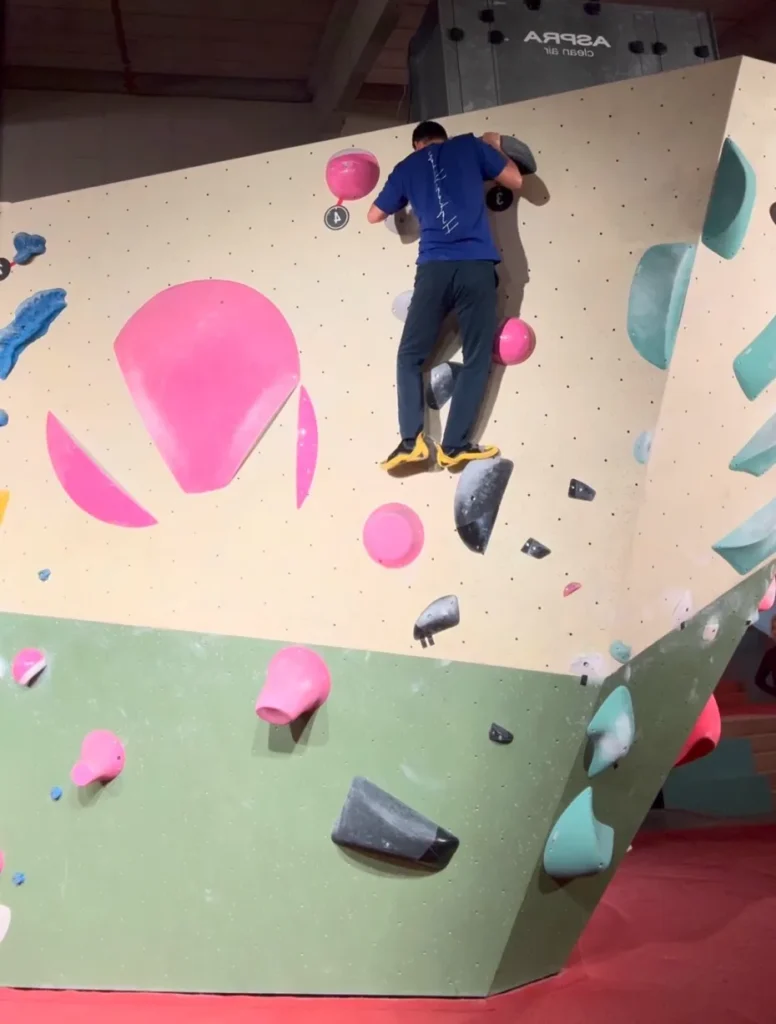
Eventually I just tried it. Badly. Came off. Tried again. Came off lower. Third attempt, something clicked. By the fifth, the fear was gone. Not because I’d found courage. Because I’d built a map. My body understood the geometry. The unknown had become known.
I saw a comment online that made this articulate itself clearly. Someone watching a climber attempt a complex move wrote: other animals don’t hesitate like this. Cats leap four times their body length with complete confidence. Falcons roll mid-air and don’t flinch. They’re not brave. They just know what they can do. Knowing your skills gets rid of fear.
That’s exactly it.
I’ve been through this in work too. Starting a company. Trying to launch something new inside it. Entering a space where you don’t yet have the vocabulary, let alone the answers. Each time there’s the same feeling at the start: opacity. You can’t model the outcome, so some part of the brain refuses to proceed cleanly. It flags everything. The fear feels like intuition. Sometimes it is. But mostly it’s just the absence of a map.
The only way through is to start moving. Badly at first. Then less badly. Until one day you realize the thing that felt dangerous now just feels like Tuesday.
What’s interesting is the first day on the wall might have taught me more than I realized. Not knowing the color system meant I had no framework for what I should be afraid of. So I just climbed. I got further than someone who knew the rules might have, precisely because I didn’t know which routes were supposed to be hard.
There’s something in that too. Sometimes the framework you’d have studied in advance is just a more sophisticated way to talk yourself out of starting.
Fear isn’t a character flaw. It’s a signal. It marks the gap between what you’re attempting and what you currently understand. That gap is real. The fear is honest. But it isn’t permanent. It dissolves through repetition, through accumulated small understandings, through your body and mind slowly building the map.
Confidence isn’t something you summon before you begin. It’s what’s left after you’ve done the thing enough times that it stops being unknown.
You don’t start confident. You start anyway.